Whether you’re processing your first ten orders or your ten thousandth, a common friction point eventually emerges in every growing business: fragmented customer data.
Growth is exciting. But growth without structure? That’s when things start to slip. You likely have support emails in one tab, a spreadsheet tracking high-value clients in another, and a mental note about a specific customer’s refund request. When you are small, this is manageable. As you scale, this fragmentation becomes a significant operational drag. You end up spending more time searching for context than actually helping the customer or planning your next growth initiative.
The real issue isn’t growth. It’s visibility.
This is usually where Customer Relationship Management (CRM) tools come in. When people hear about CRM, they often think of complex enterprise software: something heavy, expensive, and difficult to implement.
But a basic CRM doesn’t need to be complicated to be powerful, especially when your immediate goal is simply to streamline daily operations. In fact, you already have the most valuable customer data: what they bought, when they bought it, and how they paid. This can help you and your team answer simple but critical questions like:
Who is this customer?
Have they paid before?
Which statement of account is this payment tied to?
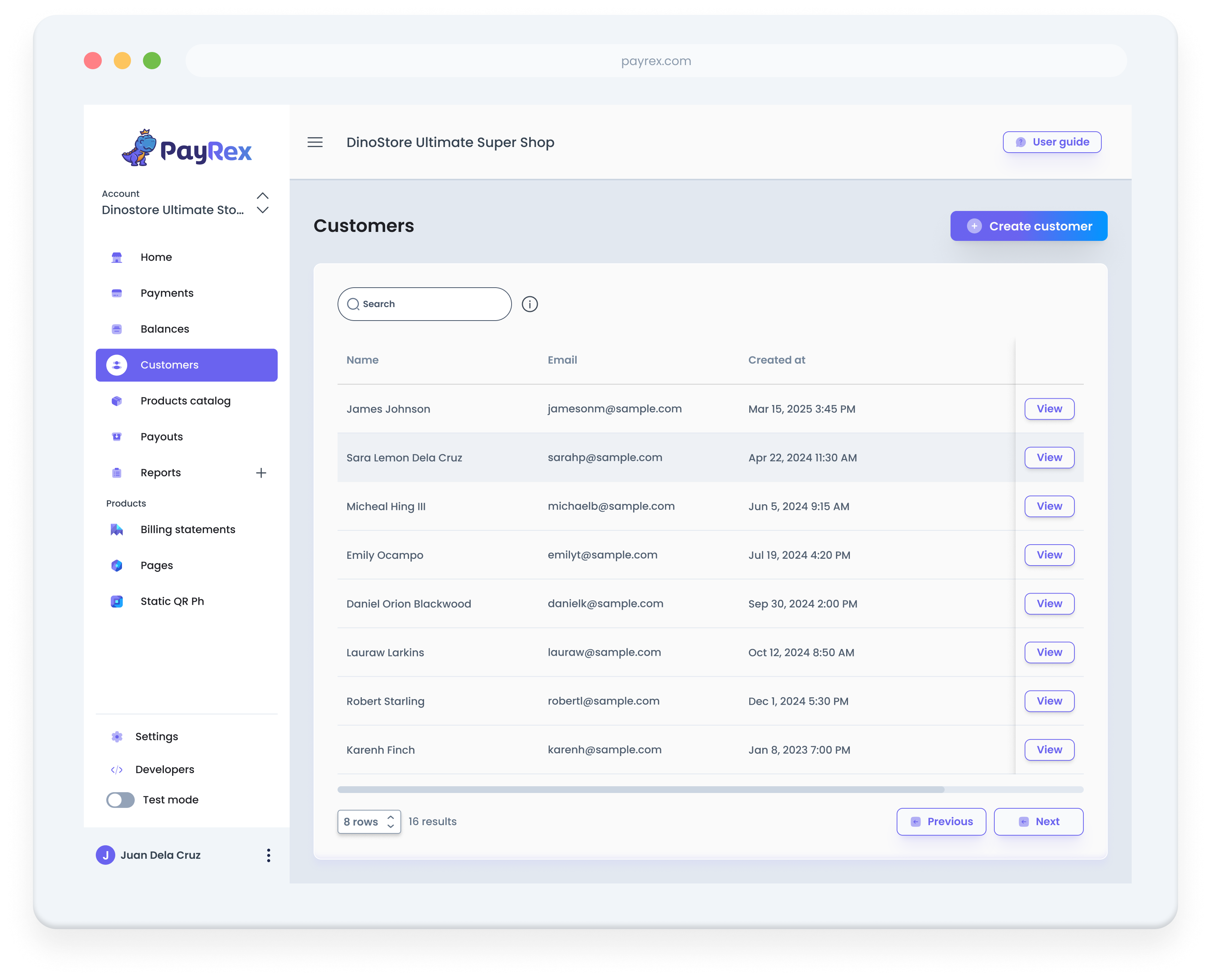
At PayRex, we believe your payment gateway shouldn't just process transactions; it should help you understand your customers. By integrating basic CRM functionalities directly into the PayRex Dashboard, you get context exactly where you need it, without adding another layer of software complexity. This built-in CRM, or what we call the Customers resource, connects the dots between your:
Here is how leveraging Customer resource within Dashboard helps resolve operational friction and supports growth:
1. Centralized customer details
Instead of searching across tools, you can store and manage:
Customer name
Customer email
Saved payment methods
Payment history
This means when a returning customer reaches out, your team immediately sees:
What they’ve purchased
When they paid
How they paid
Whether they have a card securely saved on file
This allows you to resolve issues in minutes rather than days, reducing churn.
With structured customer details readily available, you can also:
Retarget existing customers using stored emails for upsells and cross-sells
Offer faster checkout experiences with saved payment methods
2. Internal information for better reconciliation
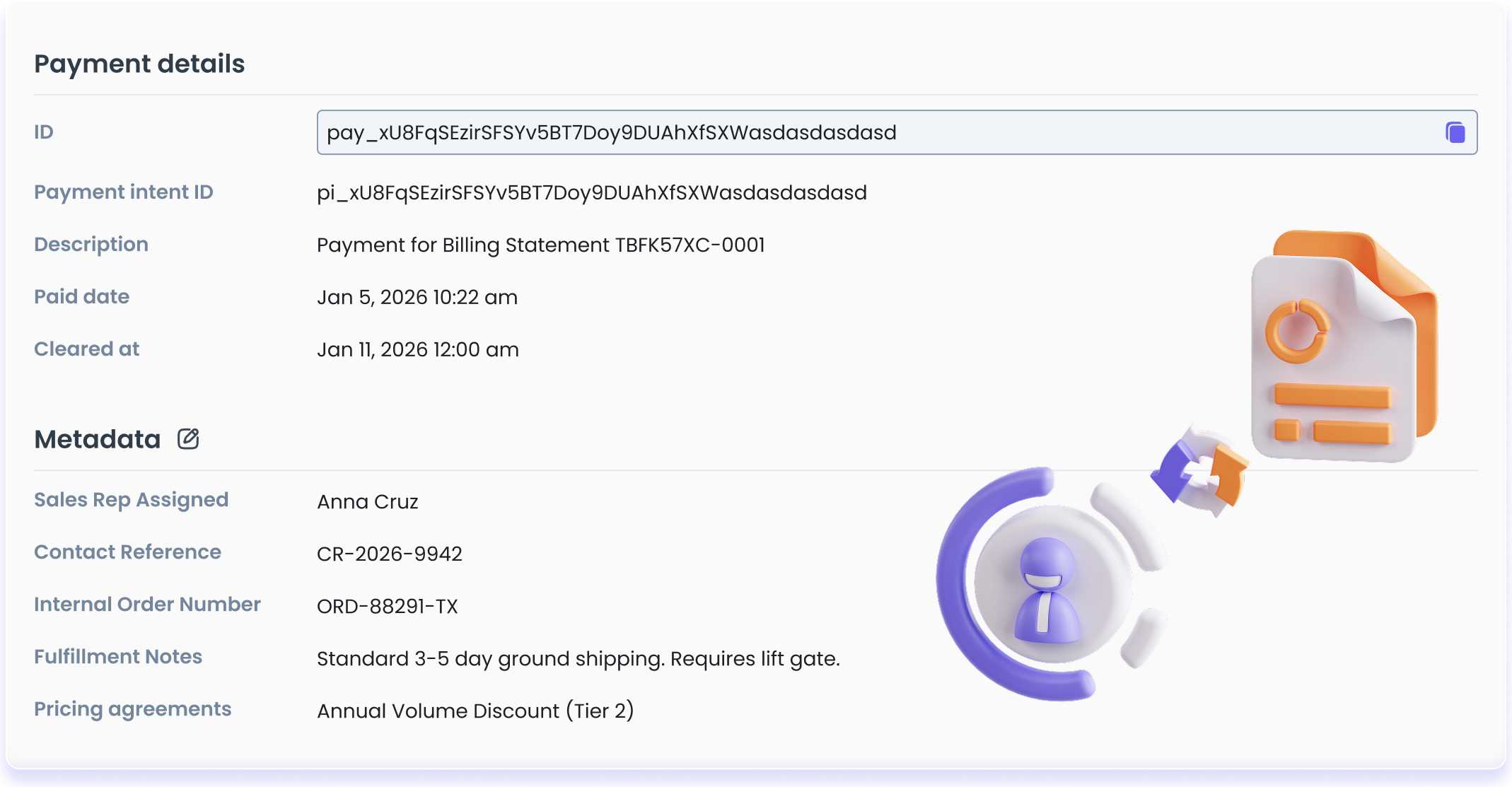
Financial records often tell what happened, but rarely why. PayRex’s Customers resource allows you to add internal notes, or metadata, to customer profiles or specific transactions—visible only to your team, which can include:
Sales rep assigned
Contract references
Internal order numbers
Fulfillment status notes
Special pricing agreements
The context is already attached to the customer and the transactions, eliminating guesswork and reducing back-and-forth between sales, operations, and accounting.
3. Statements for one-time or custom payments
Not every payment fits neatly into a checkout flow. Sometimes you need to:
Bill a specific customer for a custom project
Charge a one-time service fee
Collect partial payments
Send payment requests for enterprise clients
With billing statements built into your payment gateway:
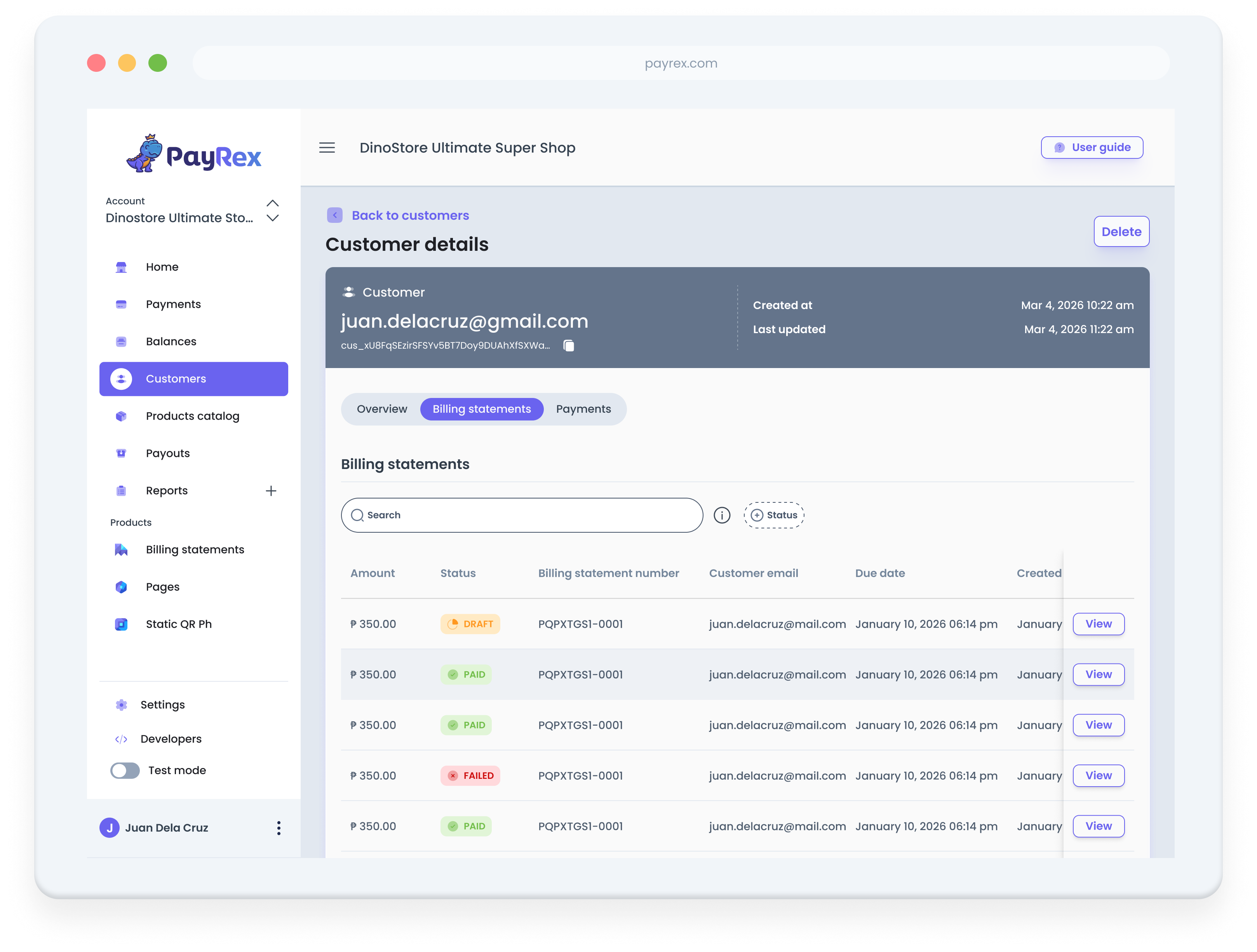
You create a statement tied to a specific customer
The customer receives a secure payment link
The payment is automatically recorded in their profile
No manual tracking. No mismatched references. No “Can you send me proof of payment?” emails.
4. Connecting payments to people
Looking at a list of anonymous transaction IDs provides little insight. When payments are linked to customer profiles, you gain:
Clear visibility into customer lifetime value, easily identifying high-value customers
Insight into repeat purchase behavior
Easier refund handling
Faster dispute resolution
The bigger you grow, the more this structure matters.
Conclusion
Managing customer relationships effectively doesn’t necessarily require complicated new software layers. By centralizing essential customer context within the payment infrastructure you already use, you remove friction from daily operations. You gain the clarity needed to support customers faster and scale your business more efficiently.
Head over to our docs to learn more about how our existing merchants use our Customers resource to improve their customers’ experience. But if you’re ready to start streamlining how you manage both payments and customer relationships, sign up now.