Manage recurring billing payments through billing statements
Jaime Hing III
April 8, 2026
•
#
min read
Manage recurring payments through billing statements
Creating and sending a PayRex billing statement is simple and straightforward. What is harder is doing it consistently, every cycle, without turning it into a manual routine. Many businesses start with a straightforward approach: create a payment request, send it to the customer, then repeat the same process the next time billing comes around. It works, especially early on. But as the number of customers and billing statements grows, the repetition becomes the real problem.
Billing is not a one-time action; it is a cycle. When that cycle depends on manual steps like creating requests, sending reminders, and checking who has paid, it slowly becomes operational overhead.
Turning billing into a structured cycle
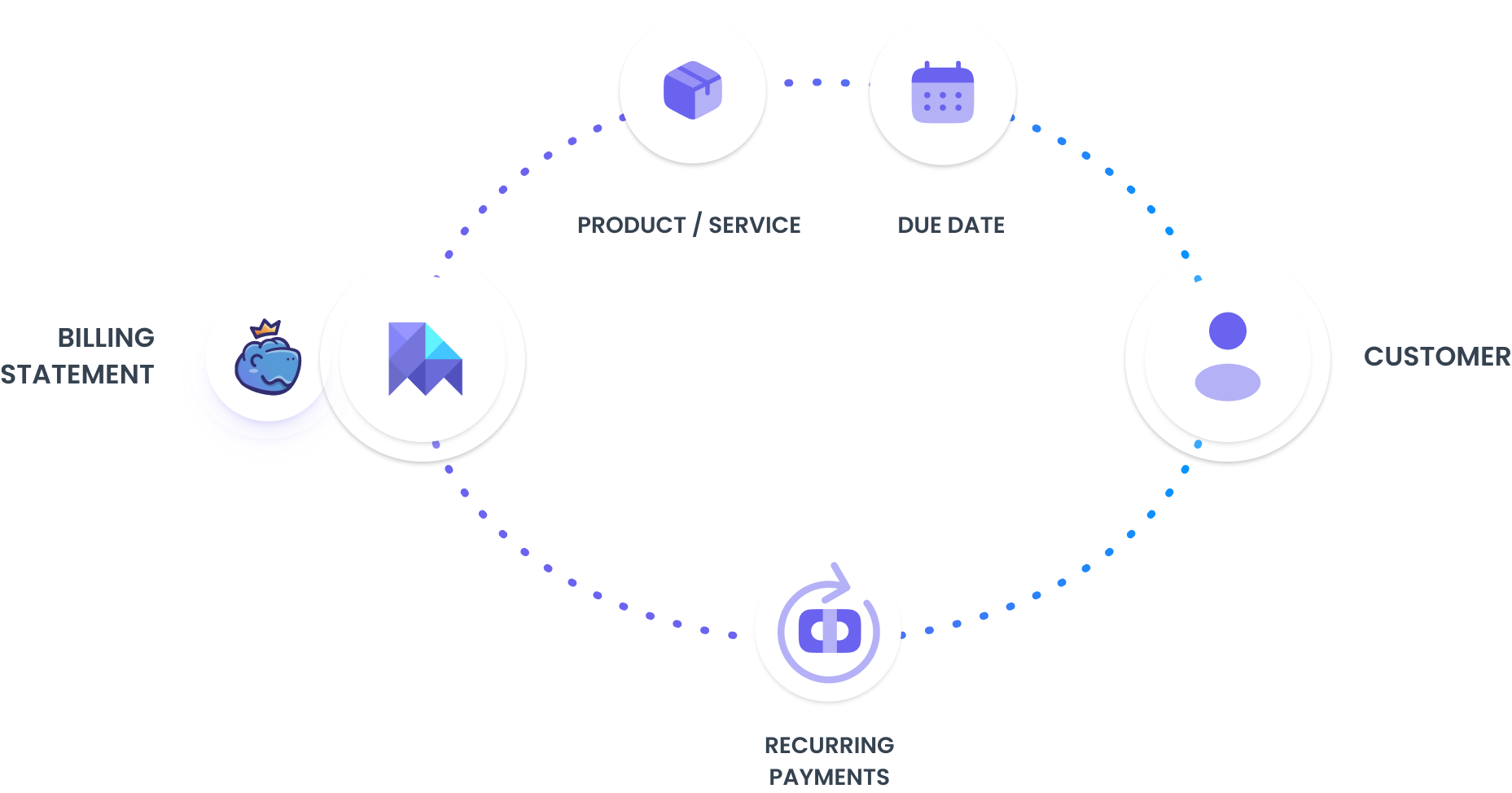
To make the billing process reliable, the first step is structure. With PayRex Billing Statements, each billing cycle is represented as a unique payment link with a defined amount and due date. Instead of recreating the same request over and over, you establish a consistent flow where every cycle is clearly defined. Repeating the same process alone already reduces friction. You are no longer thinking in terms of sending requests, but in terms of managing statements that represent each billing period. Once billing is structured this way, something important becomes possible.
From structure to automation
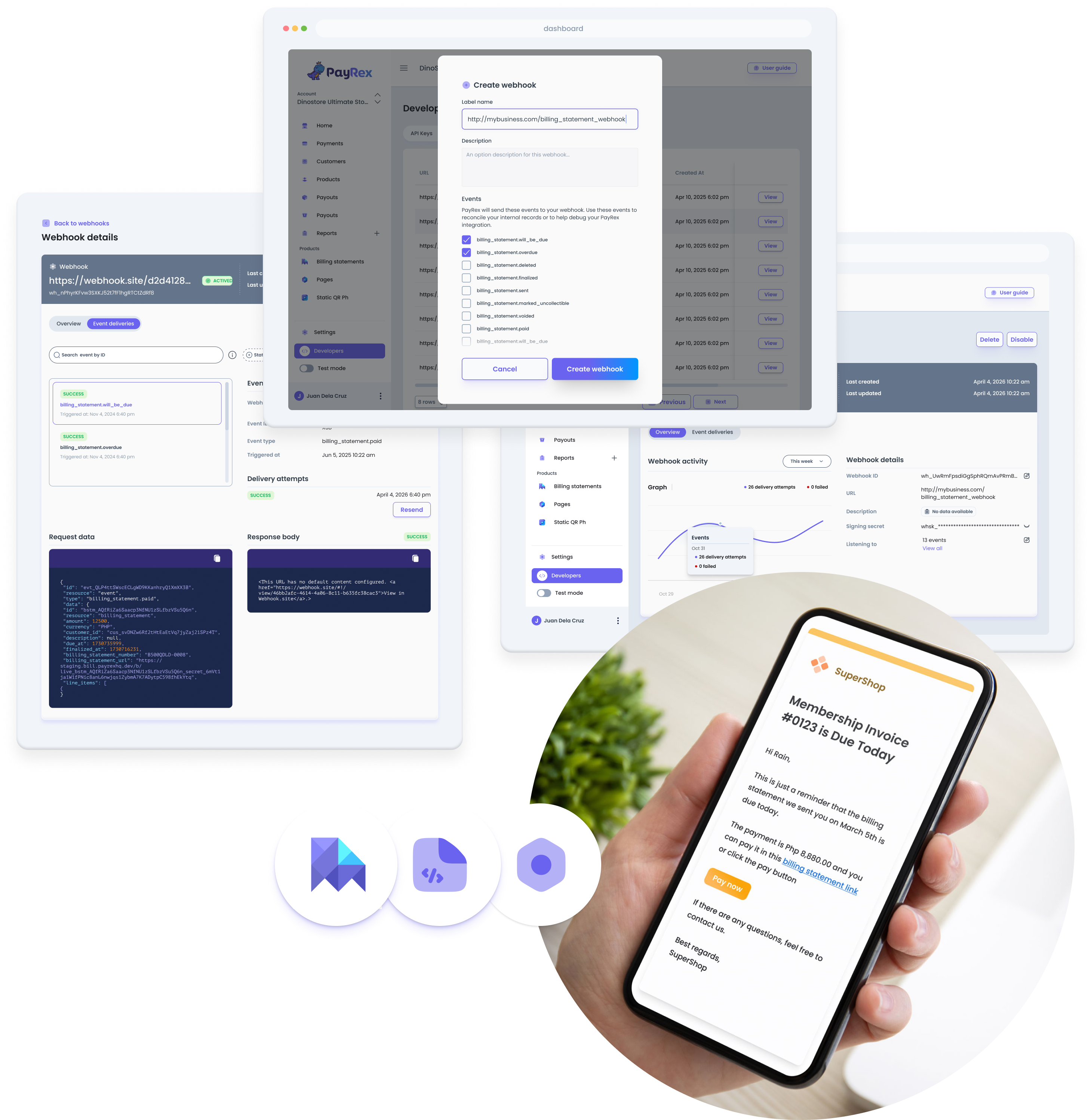
When billing follows a predictable structure, it can also become event-driven. Each statement moves through a lifecycle, approaching its due date, reaching it, and potentially becoming overdue. Instead of tracking these transitions manually, PayRex exposes them as webhook events that your system can react to in real time.
As a billing statement nears its due date, the billing_statement.will_be_due event is emitted. This webhook event provides an opportunity to notify customers in advance, without relying on manual reminders or scheduled checks.
If the customer's payment is not completed beyond the due date, the `billing_statement.overdue` webhook event will trigger every day until the maximum day of the event. At that point, your system can immediately trigger follow-ups, send additional notifications, or update internal workflows through code. The key difference is that nothing needs to be monitored manually. The system tells you when something needs attention.
Handling due dates without manual tracking
Due dates are often where billing workflows break down; not because they are hard to define, but because they are easy to forget or inconsistently enforced. By making due dates part of the billing statement itself and pairing them with webhook events, they become actionable.
You do not need to check which customers should be reminded today, or even maintain a separate tracker for overdue accounts. The lifecycle of each billing statement already includes these moments, and your system can respond automatically. Over time, this eliminates the need for manual follow-ups and reduces the risk of missed customer payments from delayed action.
A simple shift that compounds over time
The transition here is not about adopting a completely new billing model. You can keep charging customers the same way; monthly, periodically, or on your own schedule. The change is in how that process is executed. Instead of repeating the same steps every cycle, you define the billing once. Statements represent each period, and webhooks handle what happens before and after key events, such as due dates.
It is a small shift in implementation, but it compounds quickly as your volume grows.
Built for real-world billing workflows
Not every business needs a full subscription system with plans, upgrades, and complex billing logic. In many cases, what matters most is consistency; making sure every billing cycle is executed properly, every time, and that customers are notified at the right moments.
Billing statements, combined with webhooks, provide that consistency. They bring structure to the cycle and automation to the workflow, without introducing unnecessary complexity.
Start automating your billing lifecycle
The billing automation through integrating our PayRex APIs and webhooks removes the manual repetition. Establish your billing cycle once, and let PayRex Billing Statements represent each period. Use webhooks to automate notifications and follow-ups around due dates. Once this is established, billing becomes less about chasing payments and more about letting your system handle the flow.
To learn more about billing statement, you can check this guide
In payment processing, APIs handle the requests you initiate, but webhooks handle the reality of what happens next. Whether a subscription renews, a customer’s